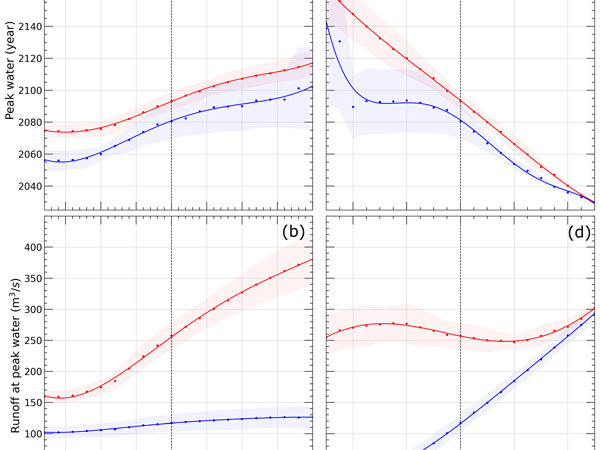
Sensitivity analysis of peak water to ice thickness and temperature: A case study in the Western Kunlun Mountains of the Tibetan Plateau
Lucille Gimenes, Romain Millan, Nicolas Champollion, and Jordi Bolibar Abstract This study investigates the sensitivity of peak water in the Western Kunlun Mountains of the Tibetan Plateau. Using the Open Global Glacier Model (OGGM), we analyze how variations in inverted initial ice volume and temperature climate forcing under different Shared Socioeconomic Pathways (SSP) affect peak water…
Keep reading
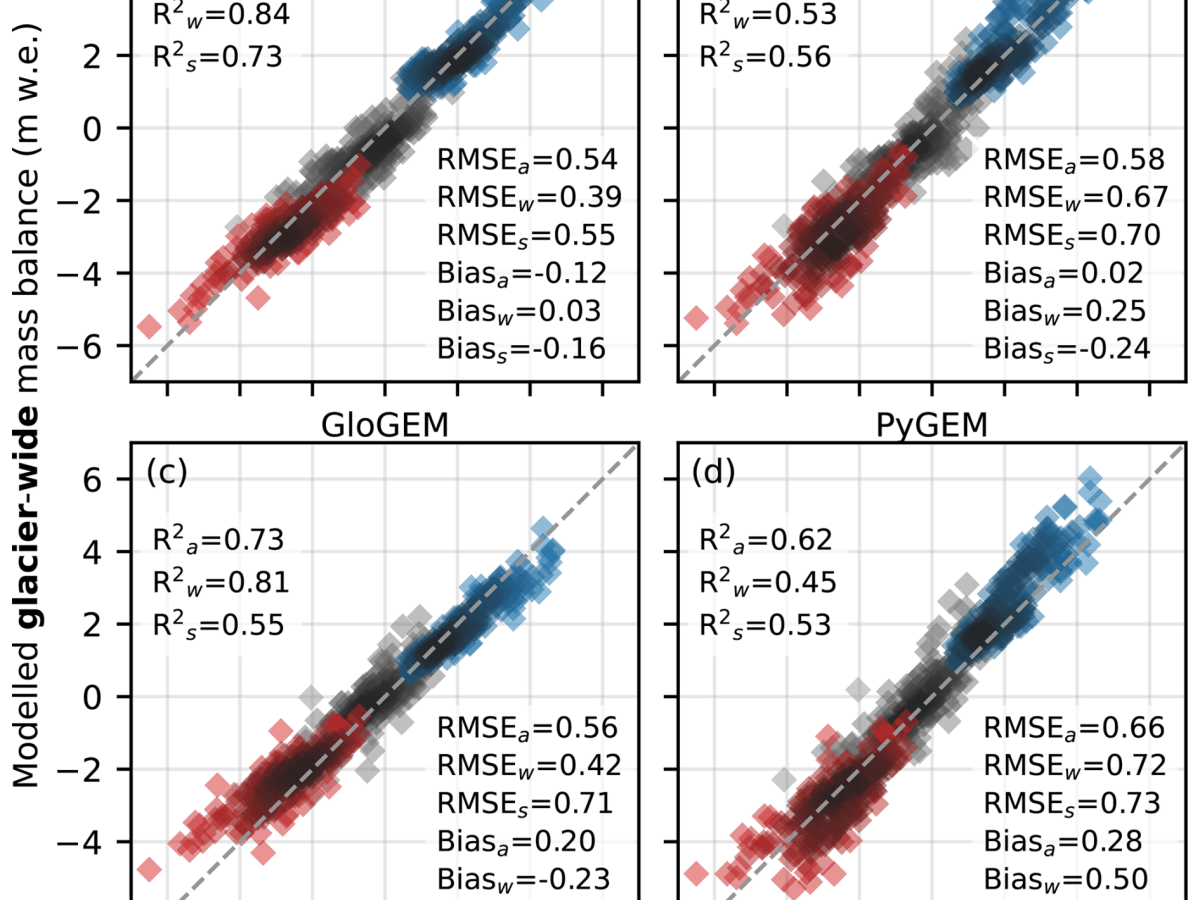
Machine learning improves seasonal mass balance prediction for unmonitored glaciers
Kamilla Hauknes Sjursen, Jordi Bolibar, Marijn van der Meer, Liss Marie Andreassen, Julian Peter Biesheuvel, Thorben Dunse, Matthias Huss, Fabien Maussion, David R. Rounce, and Brandon Tober Abstract Glacier evolution models based on temperature-index approaches are commonly used to assess hydrological impacts of glacier changes. However, current model calibration frameworks cannot efficiently transfer information from sparse…
Keep reading
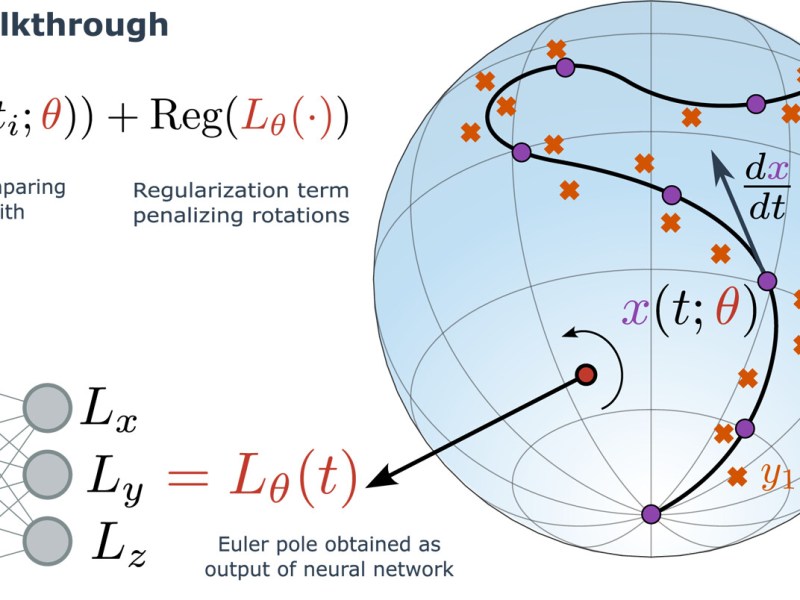
Spherical Path Regression Through Universal Differential Equations With Applications to Paleomagnetism
F. Sapienza, L. C. Gallo, J. Bolibar, F. Pérez, J. Taylor Abstract Directional data analysis plays a central role in paleomagnetism, where observations lie on a spherical surface. Existing methods for analyzing directional data often fail to incorporate prior physical knowledge about plate geodynamics, significantly constraining their potential. To address this limitation, we developed a hybrid, physics-informed machine learning…
Keep reading
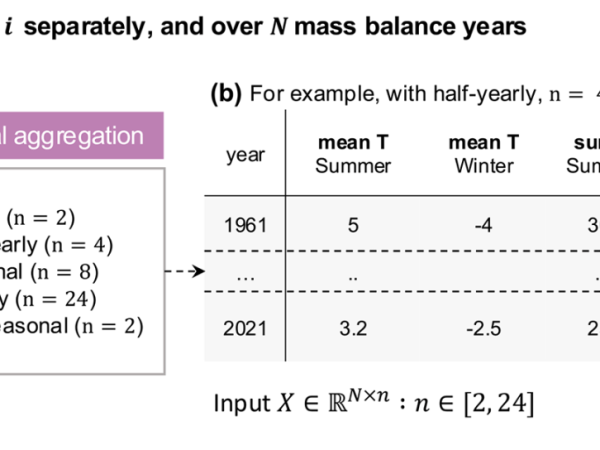
A minimal machine-learning glacier mass balance model
Marijn van der Meer, Harry Zekollari, Matthias Huss, Jordi Bolibar, Kamilla Hauknes Sjursen, and Daniel Farinotti https://tc.copernicus.org/articles/19/805/2025/ Abstract: Glacier retreat presents significant environmental and social challenges. Understanding the local impacts of climatic drivers on glacier evolution is crucial, with mass balance being a central concept. This study introduces miniML-MB, a new minimal machine-learning model designed to…
Keep reading
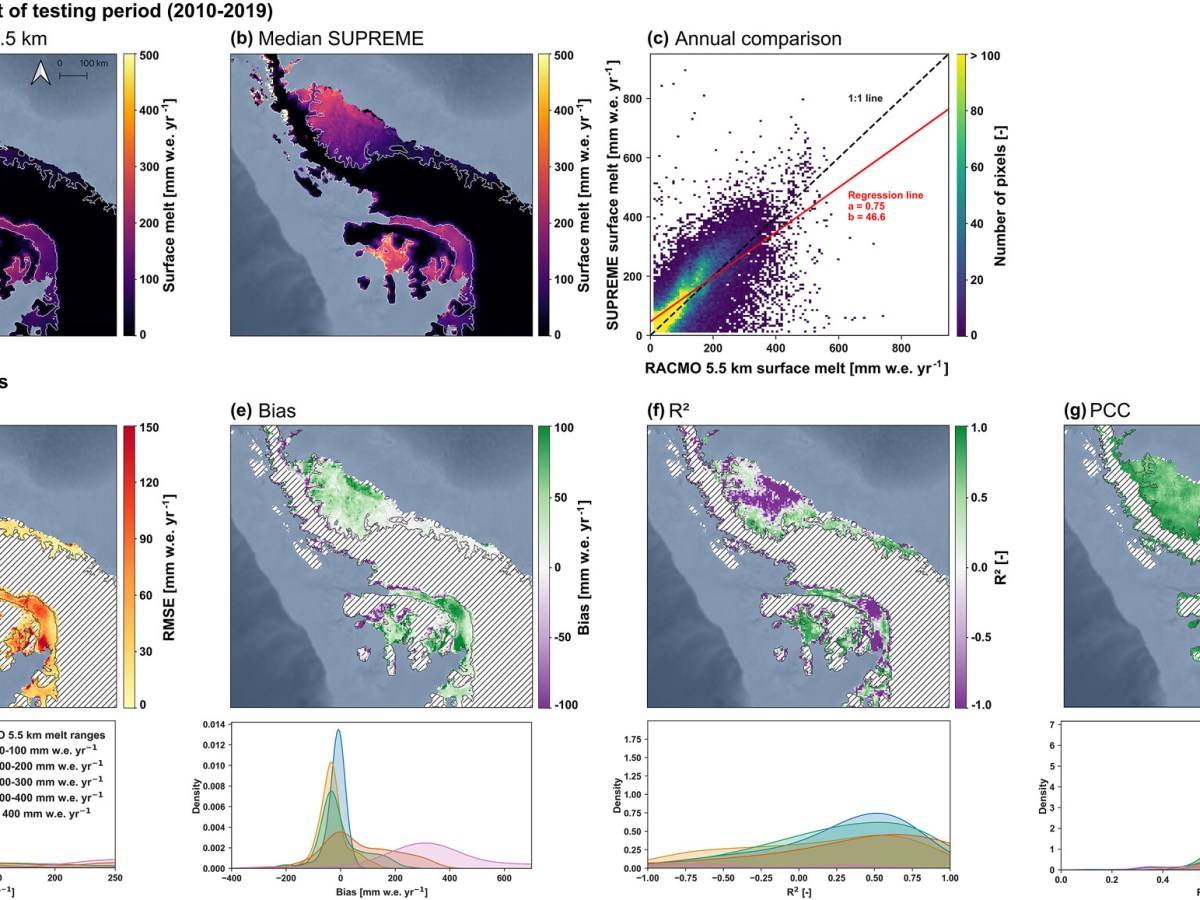
Physically-Informed Super-Resolution Downscaling of Antarctic Surface Melt
Sophie de Roda Husman, Zhongyang Hu, Maurice van Tiggelen, Rebecca Dell, Jordi Bolibar, Stef Lhermitte, Bert Wouters, Peter Kuipers Munneke Abstract Because Antarctic surface melt is mostly driven by local processes, its simulation necessitates high-resolution regional climate models (RCMs). However, the current horizontal resolution of RCMs (≈25–30 km) is inadequate for capturing small-scale melt processes. To address this limitation, we present SUPREME (SUPer-REsolution-based…
Keep reading
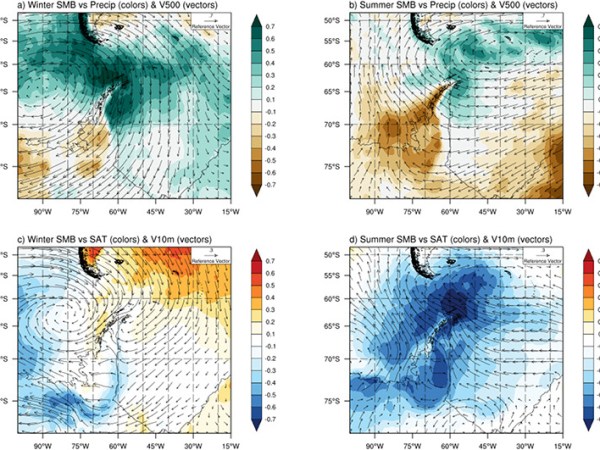
New insights on the interannual surface mass balance variability on the South Shetland Islands glaciers, northerly Antarctic Peninsula
Christian Torres a b , Deniz Bozkurt b c d, Tomás Carrasco-Escaff c, Jordi Bolibar e, Jorge Arigony-Neto a aInstitute of Oceanography, Federal University of Rio Grande, Brazil bDepartment of Meteorology, University of Valparaíso, Chile cCenter for Climate and Resilience Research (CR)2, Chile dCenter for Oceanographic Research COPAS COASTAL, Universidad de Concepción, Chile eDepartment of Civil Engineering and Geosciences, Delft University of Technology, Netherlands https://www.sciencedirect.com/science/article/abs/pii/S092181812400153X Abstract Few studies have assessed a…
Keep reading
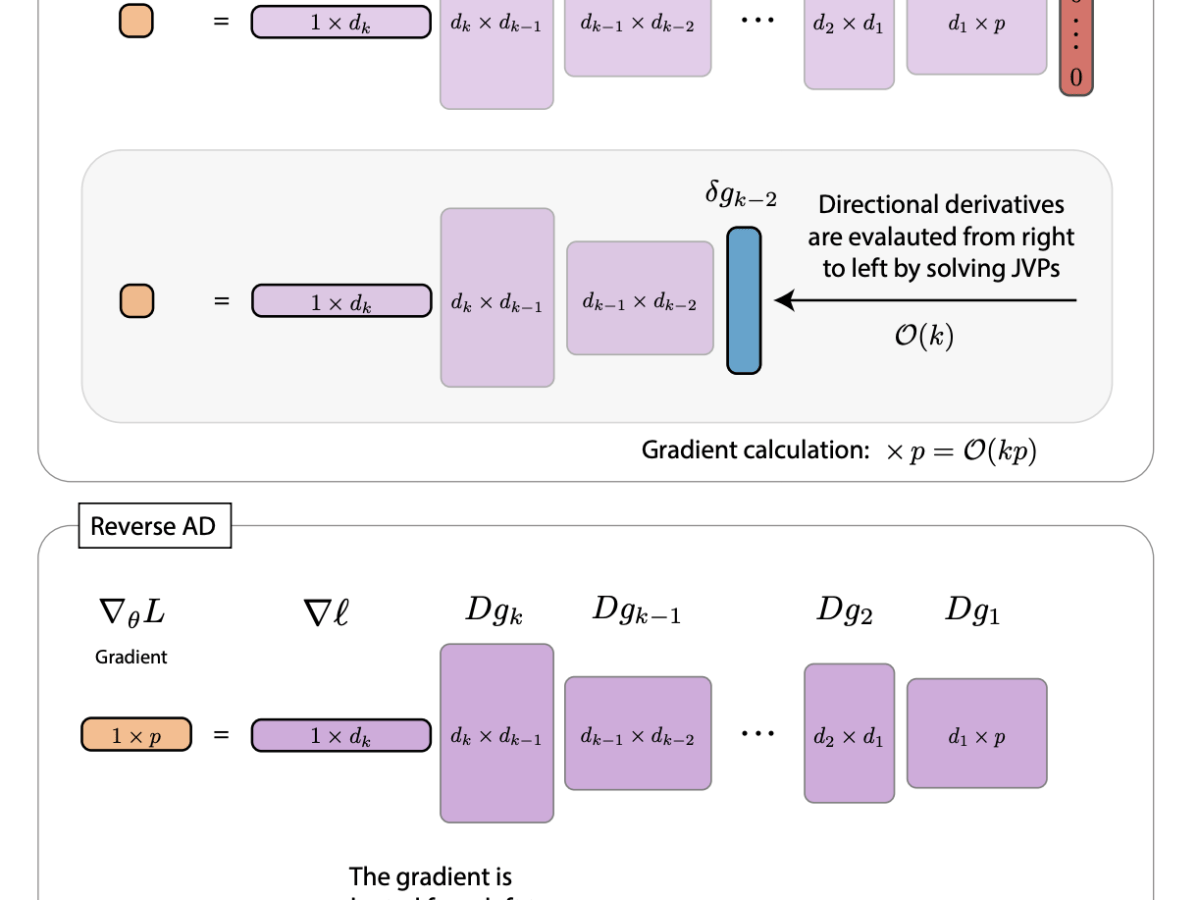
Differentiable Programming for Differential Equations: A Review
Facundo Sapienza, Jordi Bolibar, Frank Schäfer, Brian Groenke, Avik Pal, Victor Boussange, Patrick Heimbach, Giles Hooker, Fernando Pérez, Per-Olof Persson, Christopher Rackauckas https://arxiv.org/abs/2406.09699 The differentiable programming paradigm is a cornerstone of modern scientific computing. It refers to numerical methods for computing the gradient of a numerical model’s output. Many scientific models are based on differential equations, where differentiable programming plays a crucial role in calculating…
Keep reading
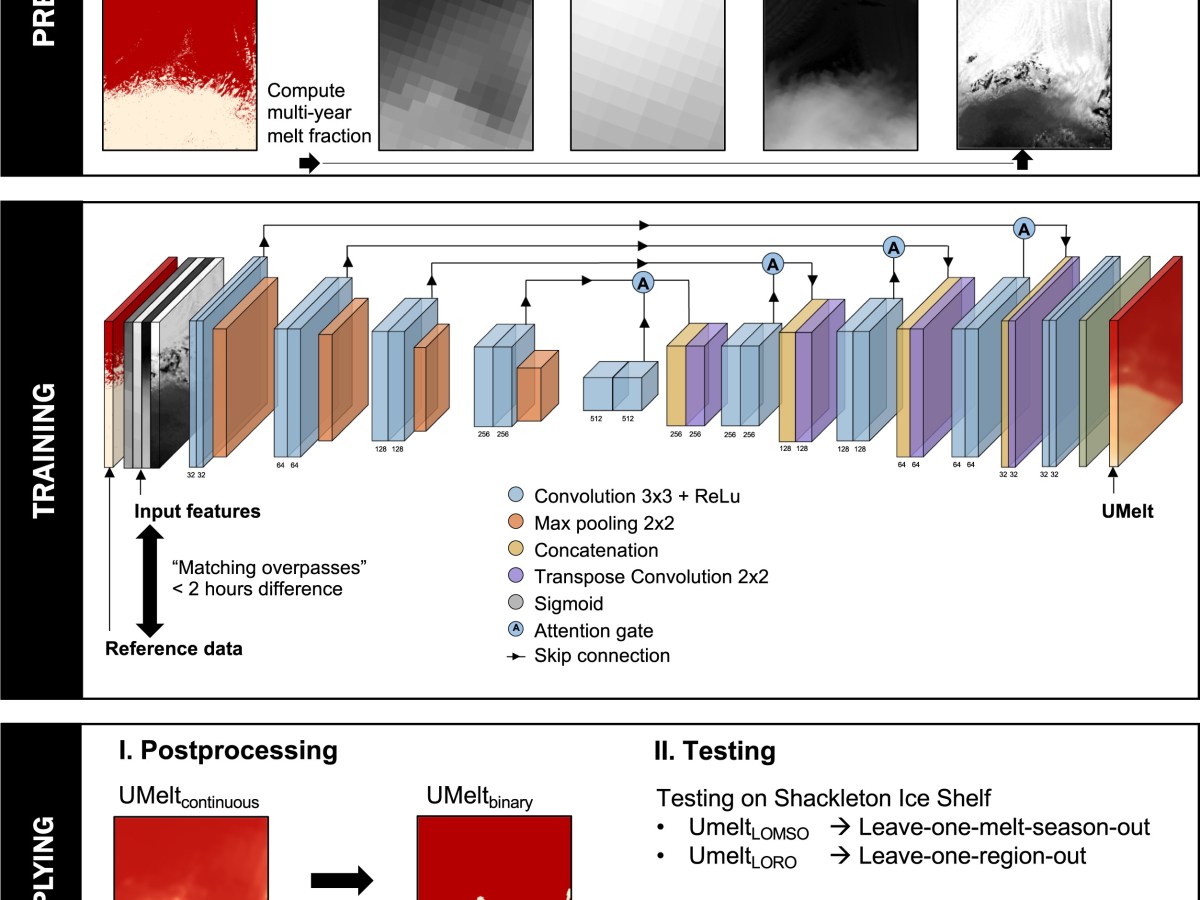
A high-resolution record of surface melt on Antarctic ice shelves using multi-source remote sensing data and deep learning
While the influence of surface melt on Antarctic ice shelf stability can be large, the duration and affected area of melt events are often small. Therefore, melt events are difficult to capture with remote sensing, as satellite sensors always face the trade-off between spatial and temporal resolution. To overcome this limitation, we developed UMelt: a…
Keep reading
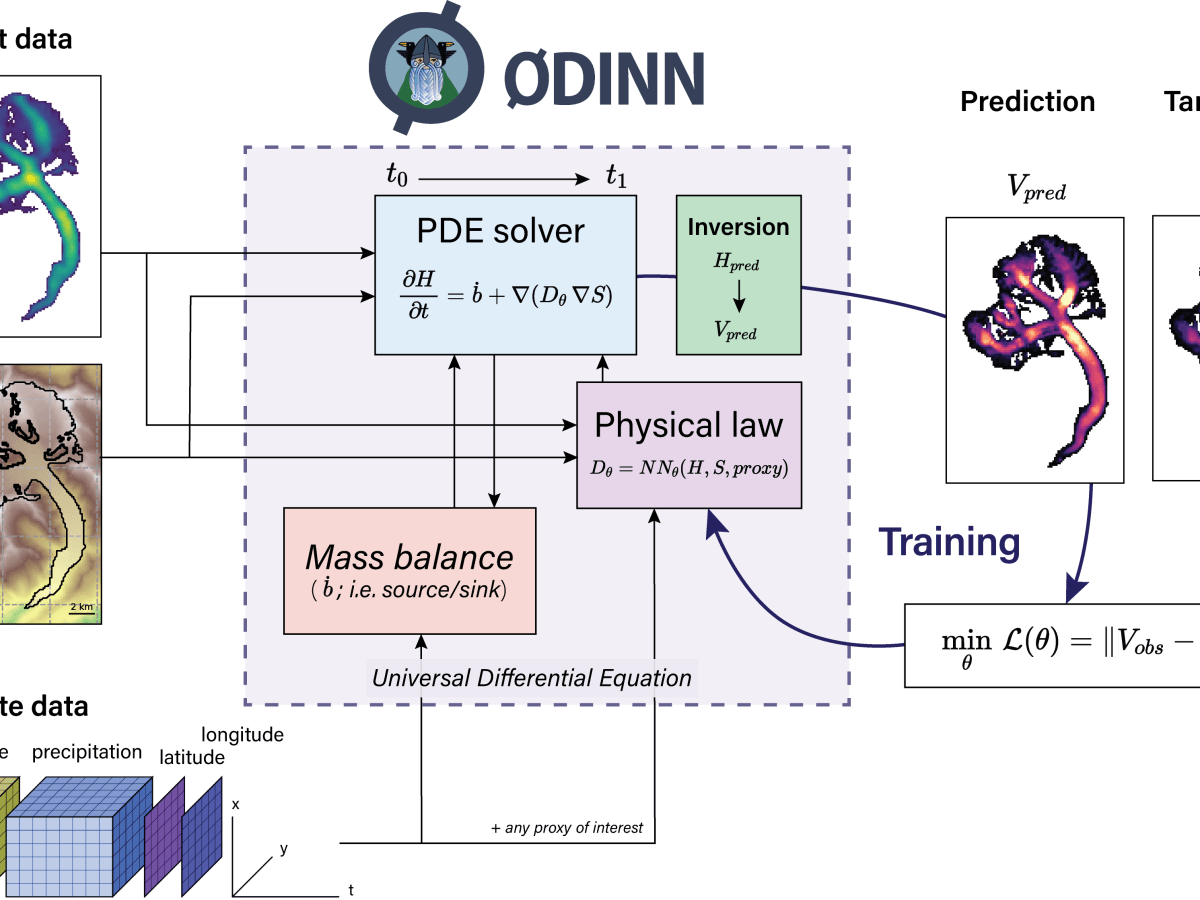
Universal Differential Equations for glacier ice flow modelling
Geoscientific models are facing increasing challenges to exploit growing datasets coming from remote sensing. Universal differential equations (UDEs), aided by differentiable programming, provide a new scientific modelling paradigm enabling both complex functional inversions to potentially discover new physical laws and data assimilation from heterogeneous and sparse observations. We demonstrate an application of UDEs as a…
Keep reading
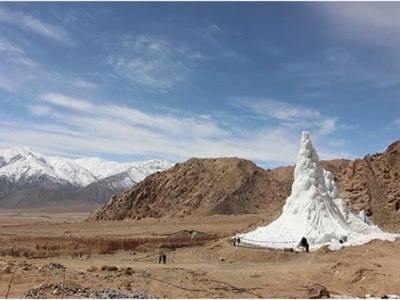
Influence of Meteorological Conditions on Artificial Ice Reservoir (Icestupa) Evolution
Since 2014, mountain communities in Ladakh, India have been constructing dozens of Artificial Ice Reservoirs (AIRs) by spraying water through fountain systems every winter. The meltwater from these structures is crucial to meet irrigation water demands during spring. However, there is a large variability associated with this water supply due to the local weather influences…
Keep reading
Nonlinear sensitivity of glacier mass balance to future climate change unveiled by deep learning
Glaciers and ice caps are experiencing strong mass losses worldwide, challenging wateravailability, hydropower generation, and ecosystems. Here, we perform the first-ever glacierevolution projections based on deep learning by modelling the 21st century glacier evolutionin the French Alps. By the end of the century, we predict a glacier volume loss between 75and 88%. Deep learning captures…
Keep reading
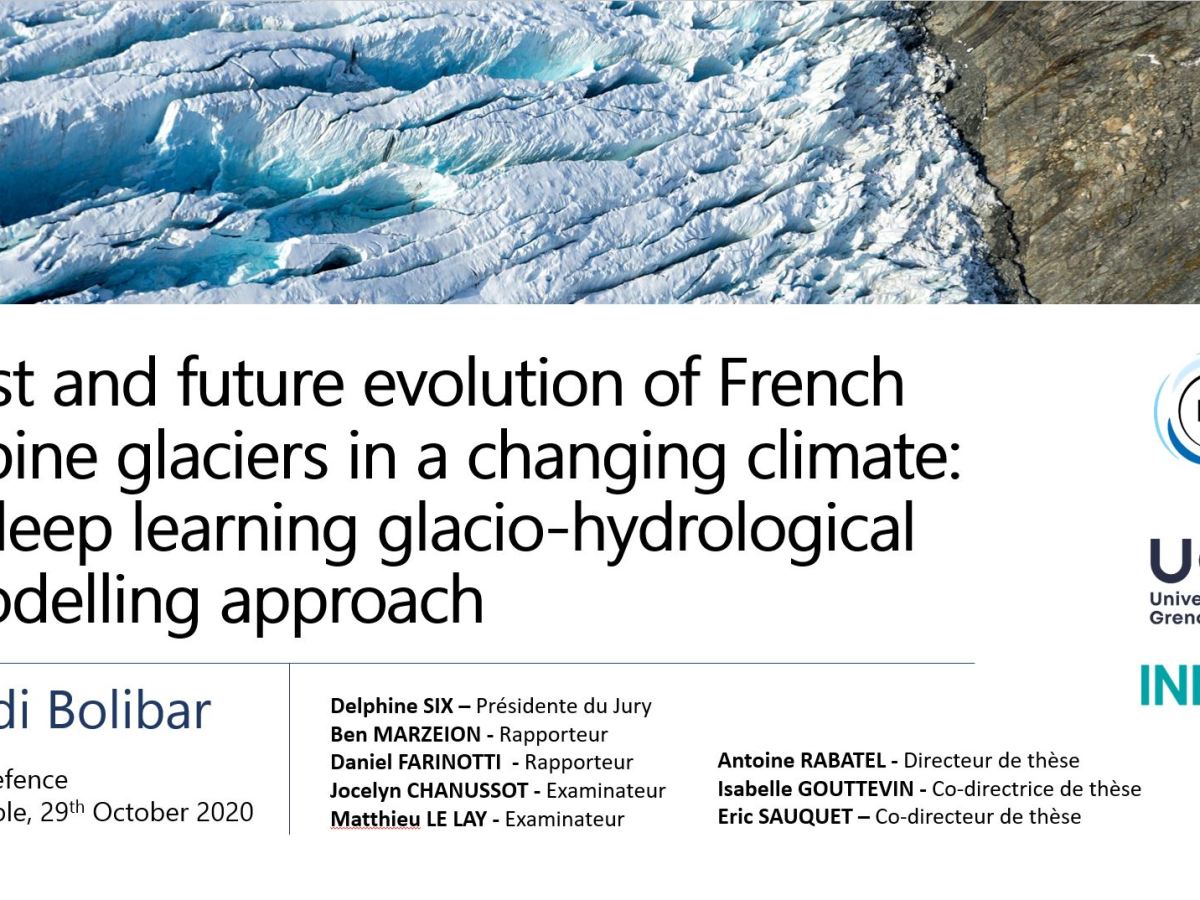
PhD defence
Online streaming recording of my PhD defence on “Past and future evolution of French Alpine glaciers in a changing climate: a deep learning glacio-hydrological modelling approach”
Keep reading
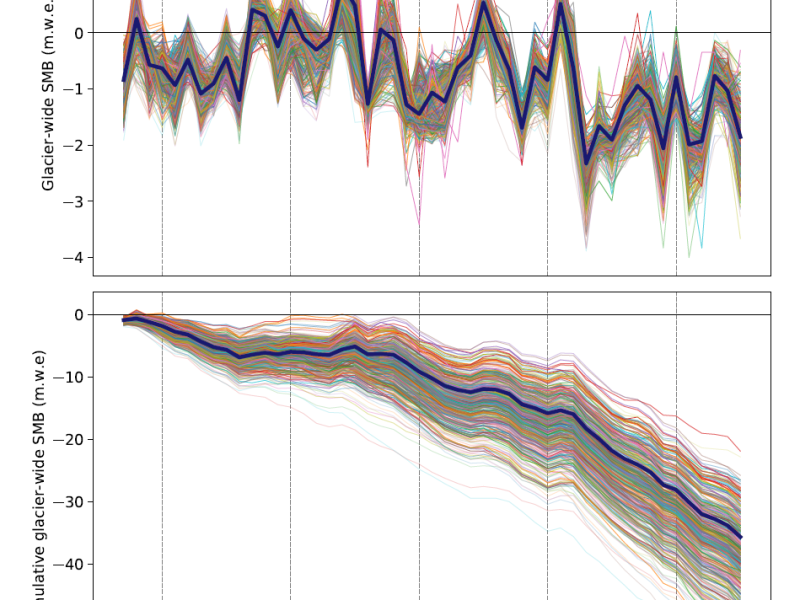
A deep learning reconstruction of mass balance series for all glaciers in the French Alps: 1967–2015
Jordi Bolibar1,2, Antoine Rabatel1, Isabelle Gouttevin3, and Clovis Galiez4 1Univ. Grenoble Alpes, CNRS, IRD, G-INP, Institut des Géosciences de l’Environnement (IGE, UMR 5001), Grenoble, France 2INRAE, UR RiverLy, Lyon-Villeurbanne, France 3Univ. Grenoble Alpes, Université de Toulouse, Météo-France, CNRS, CNRM, Centre d’Études de la Neige, Grenoble, France 4Univ. Grenoble Alpes, CNRS, Grenoble INP, LJK, Grenoble, France…
Keep reading
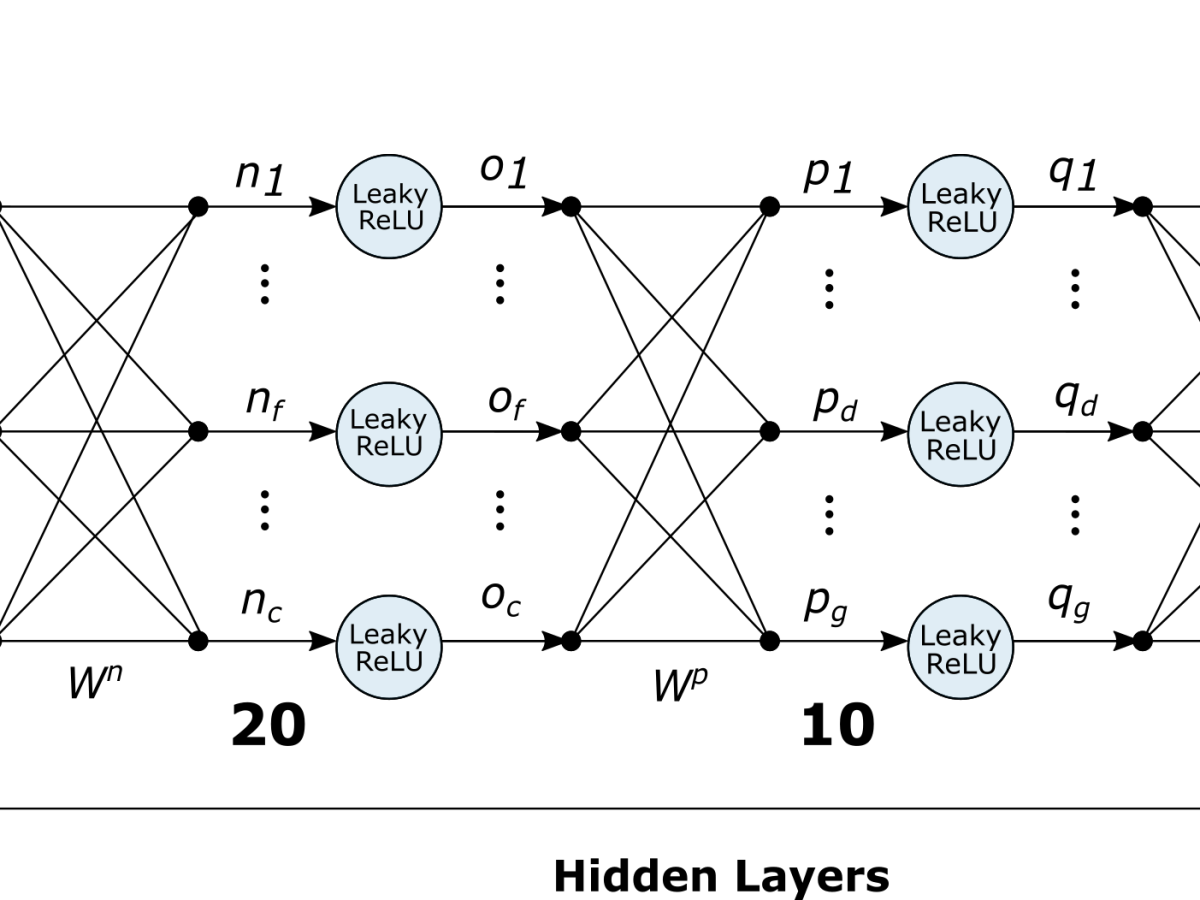
Deep learning applied to glacier evolution modelling
Jordi Bolibar1,2, Antoine Rabatel1, Isabelle Gouttevin3, Clovis Galiez4, Thomas Condom1, and Eric Sauquet2 1 Univ. Grenoble Alpes, CNRS, IRD, G-INP, Institut des Géosciences de l’Environnement (IGE, UMR 5001), Grenoble, France 2 INRAE, UR RiverLy, Villeurbanne, Lyon, France 3 Univ. Grenoble Alpes, Université de Toulouse, Météo-France, CNRS, CNRM, Centre d’Études de la Neige, Grenoble, France 4…
Keep reading
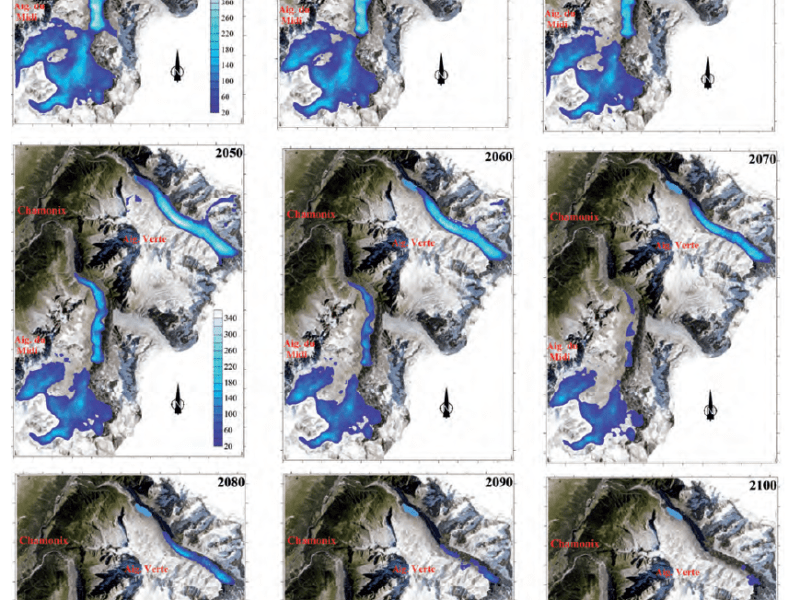
Déclin des deux plus grands glaciers des Alpes françaises au cours du XXIe siècle : Argentière et Mer de Glace
Christian Vincent¹, Vincent Peyaud¹, Olivier Laarman¹, Delphine Six¹, Adrien Gilbert², Fabien Gillet-Chaulet¹, Étienne Berthier³, Samuel Morin4, Deborah Verfaillie4,5, Antoine Rabatel¹, Bruno Jourdain¹, Jordi Bolibar¹ 1. Institut des géosciences de l’environnement, Université Grenoble Alpes / CNRS, Grenoble 2. Department of Geosciences, University of Oslo, Oslo, Norvège 3. Laboratoire d’études en géophysique et Océanographie spatiales, Université de…
Keep reading
 Jordi Bolibar